Senior Software Engineer
I am working on private cloud computing and CloudOS at Apple.
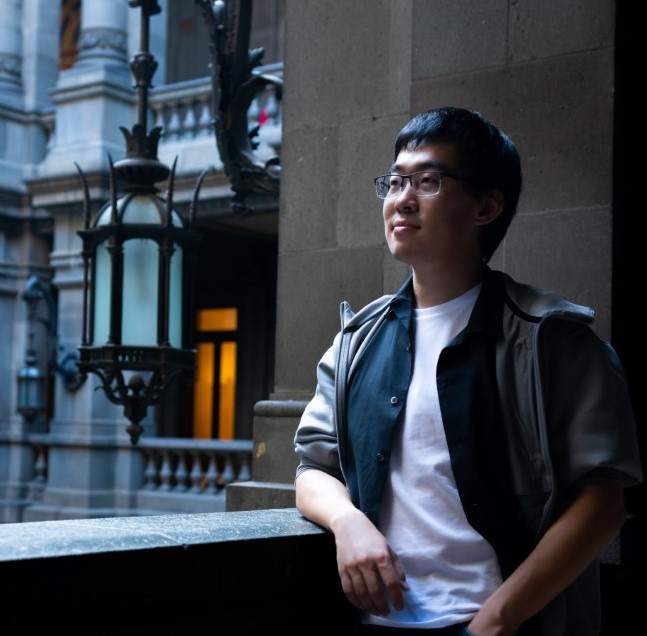
I am Zixuan Wang (王子轩), a software engineer at Apple working on CloudOS. I received my PhD from the University of California San Diego, where I worked with Prof. Jishen Zhao on architecture and systems research. I also worked with Prof. Steven Swanson at NVSL Lab, UCSD.
My research focuses on building scalable and secure systems with emerging architecture, systems, and programming technologies. At each level, I conduct systematic analysis, from characterizing performance to attacking and securing the system to developing programming support.
My industrial work across multiple companies has focused on deploying emerging technologies in real-world systems, especially trusted execution using confidential virtual machines. At Google in 2021, I worked on modernizing the Linux KVM testing framework with UEFI and AMD SEV/SEV-ES support, which became the first such contribution merged into the Linux KVM community. At Meta in 2022, I worked on the initial confidential virtual machine platform by initiating and developing the system and software support, and the work was highlighted at Meta's Annual Security Summit. At Google in 2023, I enhanced guest confidential computing with measurable hypervisor service code by leveraging AMD SEV-SNP SVSM. Previously at SK hynix in 2019, I worked on early evaluation of CXL prototypes, which led to one of the first publications on CXL systems.
I am working on private cloud computing and CloudOS at Apple.
I worked on private cloud computing and CloudOS at Apple.
I worked in STABLE Lab and NVSL Lab on architecture and systems design for memory and secure systems.
Built AMD SEV-SNP SVSM support in Google Cloud to enhance confidential computing. I received a peer bonus for this work.
Deployed the first confidential virtual machine platform at Meta.
Initiated and developed confidential virtual machine platform support at Meta.
Developed UEFI and AMD SEV/SEV-ES support for KVM-unit-tests. The code was merged by the Linux KVM community, and I received two peer bonuses during this internship.
Evaluated the performance of CXL memory prototypes and enabled GPU direct access to coherent off-chip memory.
I worked in the Computer Architecture Lab on operating systems and computer architecture.
Kevin Song, Jiacheng Yang, Zixuan Wang, Jishen Zhao, Sihang Liu, Gennady Pekhimenko
Haolan Liu, Zixuan Wang, Jishen Zhao
Zixuan Wang, Suyash Mahar, Luyi Li, Jangseon Park, Jinpyo Kim, Theodore Michailidis, Yue Pan, Tajana Rosing, Dean Tullsen, Steven Swanson, Kyung Chang Ryoo, Sungjoo Park, Jishen Zhao
Hanxian Huang, Zhenghan Lin, Zixuan Wang, Xin Chen, Ke Ding, Jishen Zhao
Zixuan Wang, et al.
Zixuan Wang, Mohammadkazem Taram, Daniel Moghimi, Steven Swanson, Dean Tullsen, Jishen Zhao
Jamshed Ashurov, Zixuan Wang, Jishen Zhao
Zixuan Wang, Joonseop Sim, Euicheol Lim, Jishen Zhao
Maximilian Apodaca, Shengye Wang, Zixuan Wang, Jishen Zhao
Hanxian Huang, Zixuan Wang, Juno Kim, Steven Swanson, Jishen Zhao
Zixuan Wang, Xiao Liu, Jian Yang, Theodore Michailidis, Steven Swanson, Jishen Zhao
Zixuan Wang, Xiao Liu, Jian Yang, Theodore Michailidis, Steven Swanson, Jishen Zhao
Joseph Izraelevitz, Jian Yang, Lu Zhang, Juno Kim, Xiao Liu, Amirsaman Memaripour, Yun Joon Soh, Zixuan Wang, Yi Xu, Subramanya R Dulloor, Jishen Zhao, Steven Swanson
Zixuan Wang, Xiao Liu, Jongryool Kim, Hokyoon Lee, Jishen Zhao
Side-channel attacks in non-volatile main memory systems.
Technologies: C, x86 Assembly, Linux Kernel, Reverse Engineering, Side-Channel Attacks.
Initiated AMD SEV-SNP SVSM support to enhance Google Cloud confidential virtual machines.
Built the initial SVSM support in Google Cloud's Linux kernel, hypervisor, guest firmware, and guest kernel.
Technologies: C, x86 Assembly, KVM, UEFI, AMD SEV-SNP, AMD SVSM, Rust.
Initiated and developed the first confidential VM platform at Meta, later highlighted at Meta's Annual Security Summit.
Built the initial software and operating system support for the first confidential virtual machine platform at Meta.
Technologies: QEMU, C++, x86 Assembly, KVM, UEFI, AMD SEV, Rust.
Started as my 2021 Google internship project and later continued in spare time.
Technologies: C, x86 Assembly, KVM, SeaBIOS, UEFI, AMD SEV, AMD SEV-ES, GNU Toolchain, Linker Script.
Built a CXL-based disaggregated memory system for large-model training infrastructure. Accepted by HPCA 2022.
Technologies: CXL, FPGA, TensorFlow, CUDA, Verilog.
MICRO 2020 paper: Characterizing and Modeling Non-Volatile Memory Systems.
Technologies: C, Linux Kernel, x86 Assembly.
MICRO 2020 paper: Characterizing and Modeling Non-Volatile Memory Systems.
Technologies: C++17, Python, R, Cycle-Accurate Simulation.
Work completed during my SK hynix internship.
Technologies: FPGA, GPU, Linux, GEN-Z, CXL.
Deployed in a production environment.
Technologies: FPGA, Linux, Userspace IO, MIPS Assembly.
A micro:bit emulator based on QEMU.
Technologies: C, ARM Assembly, ARM Mbed OS, Bootloader, QEMU.
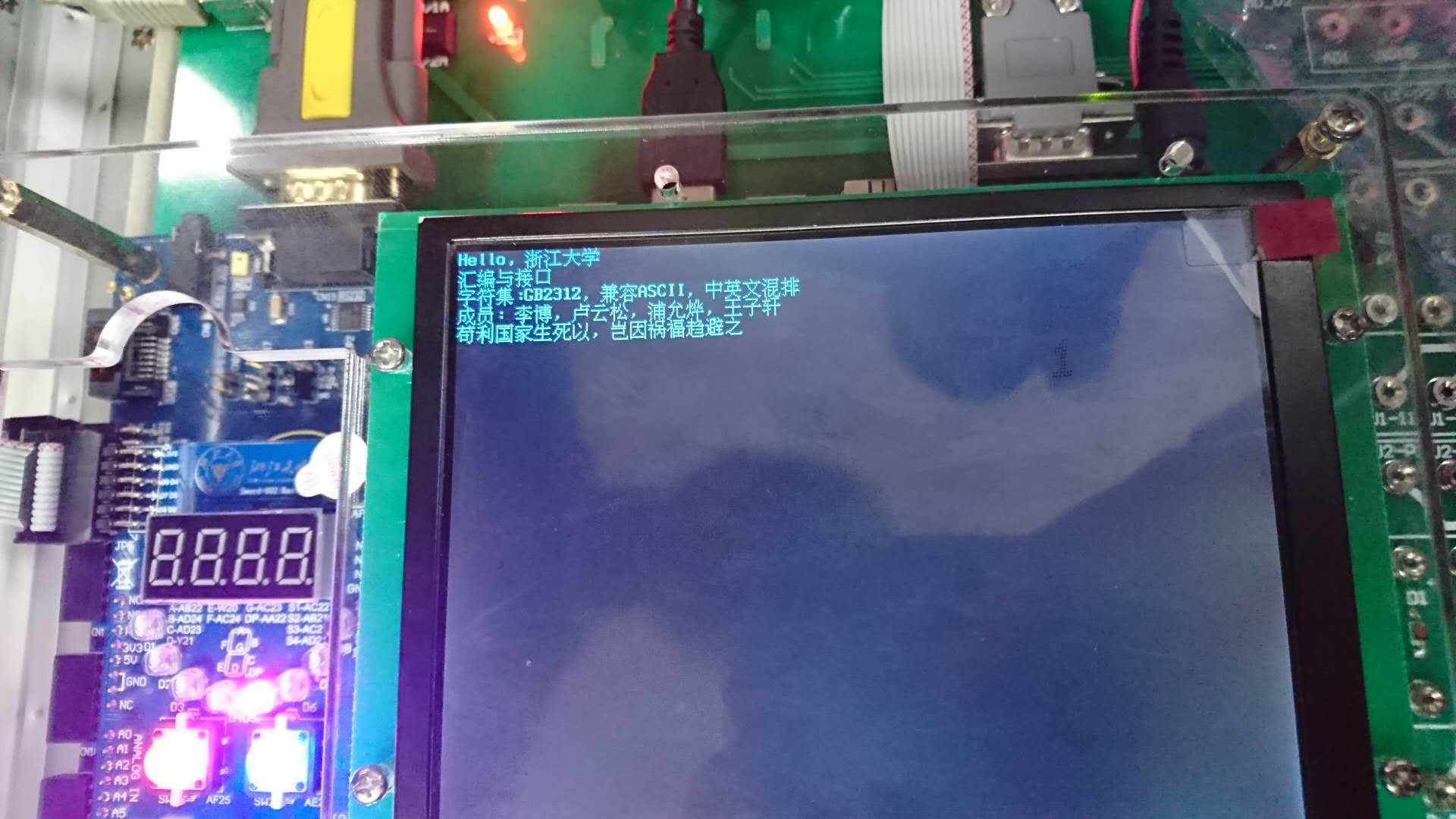
An operating system built from scratch and running on a self-designed SoC.
Technologies: Open Source, OS Design, Bootloader, C, MIPS Assembly, Linker Script.
An SoC built from scratch using FPGA.
Technologies: Open Source, FPGA, Verilog, CPU Design, Peripheral Design.
A portable modular 3D bioprinter that prints tissue directly on wounds.
Technologies: Image Processing, Mechanical Design, Real-Time Systems.
An FPGA acceleration of PCISPH fluid simulation.
Technologies: Graphics Engine, FPGA.
The first GNU linker script highlighting extension for VS Code, based on TextMate grammars.
Technologies: VS Code Extension, YAML, Linker Script.
LaTeX template for Zhejiang University graduate design and thesis.
Technologies: LaTeX.
A Chinese input method written in pure MIPS assembly.
Technologies: MIPS Assembly, Keyboard Interrupt, VGA Display.
A simple compiler for the Tiger programming language.
Technologies: Bison, Flex, C++11/14.